How to Make Biltong at Home: A South African Guide
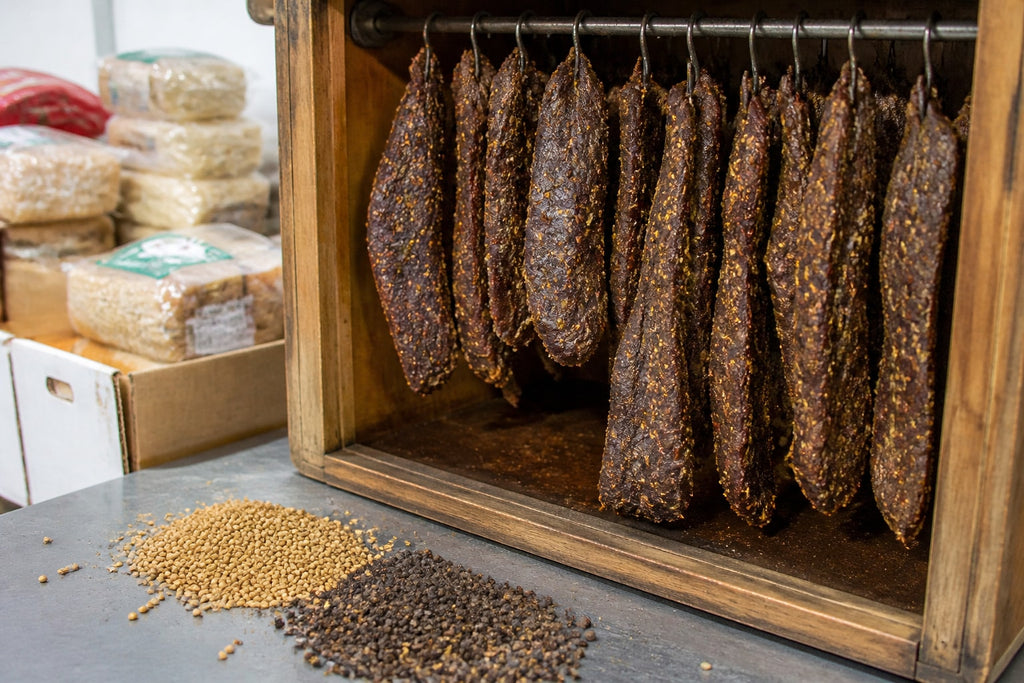
To learn how make biltong at home, you need four things: a lean cut of beef, a vinegar and salt cure, a spice mix built around coriander, and a dry, ventilated place to hang the strips for several days. The method is simple, but the details around salt, temperature and airflow decide whether you end up with tender, safe biltong or a wasted batch.
For South Africans in New Zealand, a home-made batch is often the closest thing to a weekend at home, with a braai on the go and a packet of dried meat on the table. This guide walks through each stage in the order you will do it.
What You Need to Make Biltong at Home
The equipment list for biltong is short, and most of it is already in a New Zealand kitchen.
Ingredients:
- 1 to 2 kg of lean beef
- Coarse salt
- Brown malt vinegar or a similar vinegar
- Whole coriander seed and black pepper
- Brown sugar (optional, for a softer flavour)
- Bicarbonate of soda (optional, to soften the meat)
Equipment:
- A sharp knife, or a small biltong cutter for slicing the cured meat
- A non-reactive container or tray for marinating
- Biltong hooks or stainless steel S-hooks
- A drying box, cabinet or purpose-built dryer, with a small fan
- A food thermometer and a hygrometer, if you want to be precise
The drying box is the one item people tend to improvise. A cardboard box with a lightbulb works for some, but a dedicated unit such as the Mellerware Biltong King gives steadier airflow and heat. If you would rather not source every item separately, the make your own biltong collection groups kits, spices and accessories in one place.
Choosing the Right Cut of Beef
The best cut for biltong is a whole, lean muscle with little internal fat, and silverside is the most common choice among South African home makers.
Silverside (called topside or outside round in some countries) is affordable, lean and has a long, even grain. Topside and rump also work well. Fillet is excellent but costly for what is essentially a drying exercise.
Look for these qualities when buying:
- Minimal marbling. Fat does not dry the way muscle does and can turn rancid over time.
- A uniform shape. Even thickness means even drying.
- Fresh, well-trimmed meat. Ask the butcher to remove silverskin and heavy fat caps.
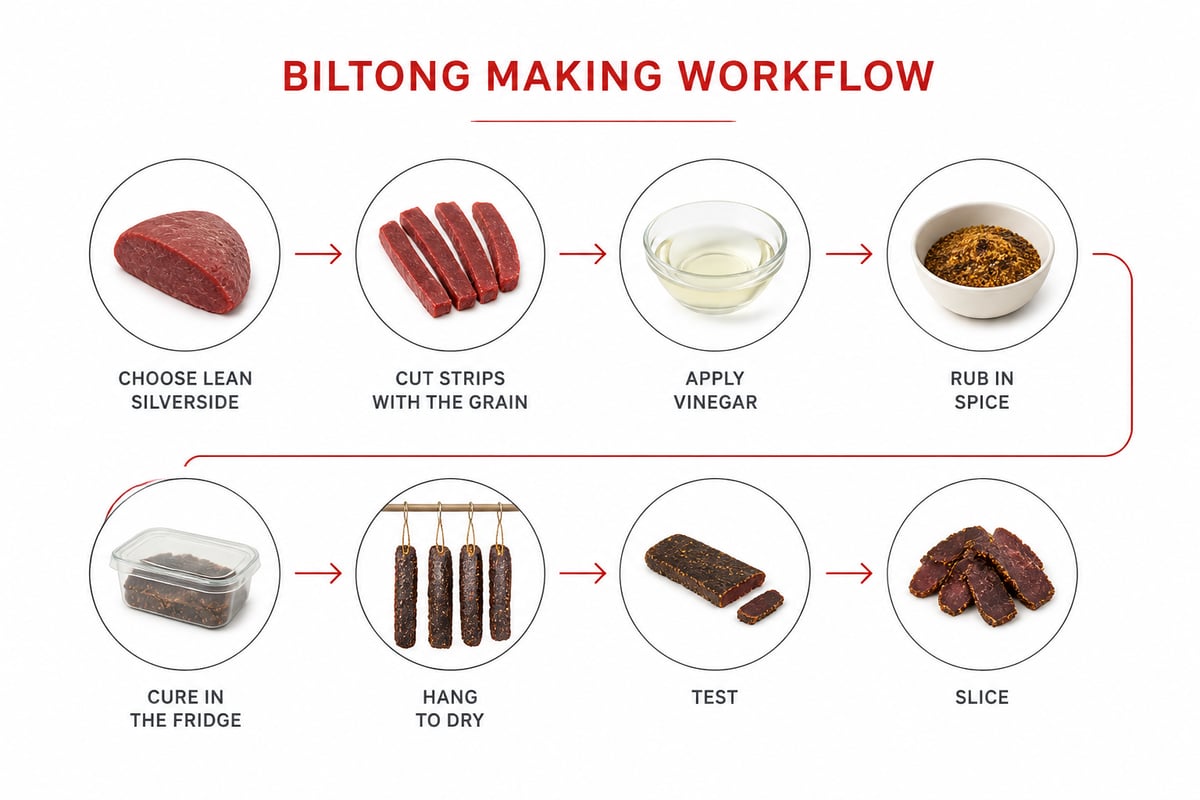
Cut the beef into strips roughly 2.5 cm thick and 20 to 25 cm long, slicing with the grain. Cutting with the grain keeps the strips structurally sound on the hook and gives that characteristic pull when you bite and slice across the grain later at the table.
The Vinegar Cure and Spice Rub
The vinegar and salt cure is what makes biltong safe and flavoursome, so measure it rather than guessing.
New Zealand's Ministry for Primary Industries specifies at least 30 g of vinegar and 30 g of salt per kilogram of meat in its biltong process guidance. Treat those numbers as a floor, not a target to shave down. Many South African recipes use more salt than this, which is fine, provided you are not exceeding your own taste.
Step-by-step cure
- Lay the strips in a single layer in a non-metallic tray.
- Sprinkle or spray the vinegar evenly over every surface, turning the strips so both sides are coated.
- Apply the salt and spice mix, rubbing it in so it covers all sides.
- Layer the strips with a little extra spice between layers if stacking.
- Cover and refrigerate.
Building the spice mix
Traditional biltong spice is built on roasted, coarsely crushed coriander seed and cracked black pepper, with salt as the backbone. A basic ratio is two parts coriander to one part pepper, with salt added by weight against the meat.
Dry-roast the coriander in a pan until fragrant, then crush it lightly in a mortar so some seeds stay partly whole. That texture is part of the biltong character.
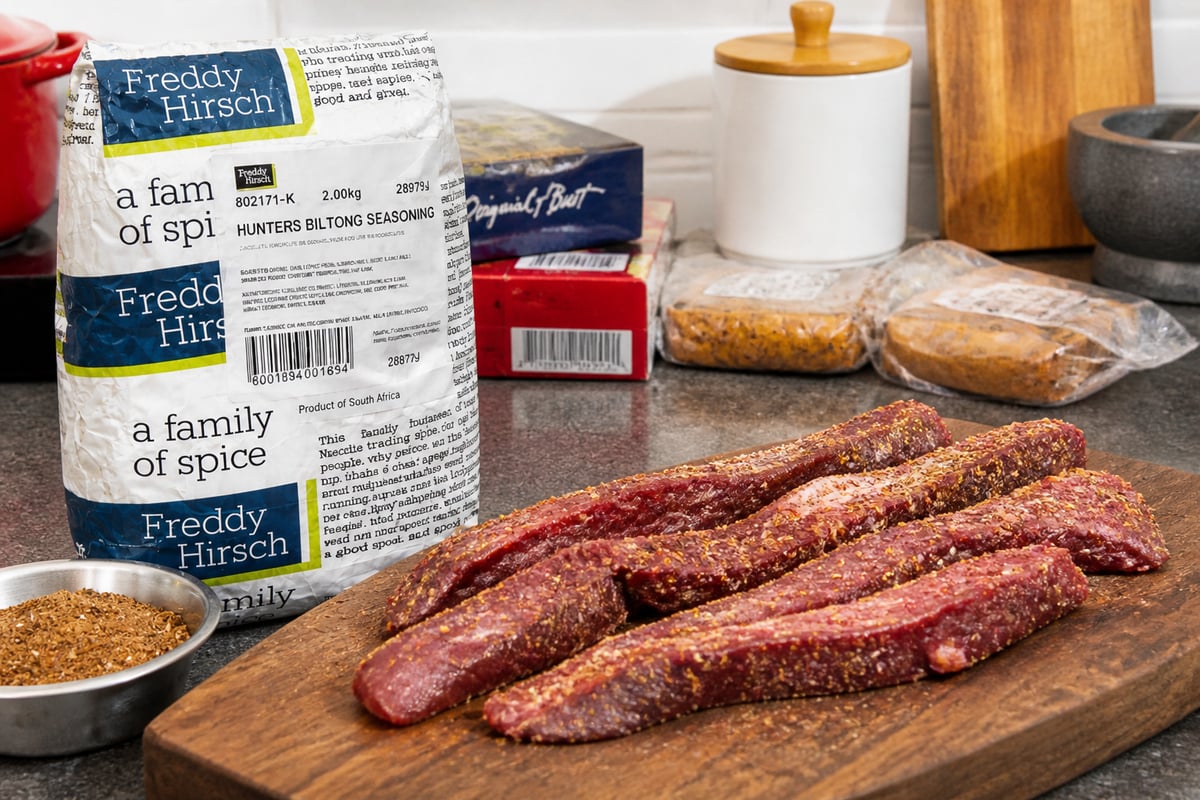
If you prefer a ready-made blend, the Freddy Hirsch Hunters Biltong Seasoning 2kg is a seasoning-only pack that combines flavouring, coriander, salt, sucrose and black pepper, which suits anyone planning several batches. You can find it at Something From Home, a South African food store in New Zealand with more than 2,500 South African products.
How Long to Marinate the Meat
Marinate the meat in the fridge for at least 10 hours, and up to 24 hours for a stronger flavour.
Marinating should happen at or below 5°C for at least 10 hours, so a cold fridge matters as much as the clock. Check your fridge with a thermometer rather than assuming it is cold enough, especially in a New Zealand summer when door openings add up.
Turn the strips once or twice during the cure so the liquid redistributes. Before hanging, you can give the meat a quick dab with paper towel to remove surface moisture. Do not rinse off the spice.
Some makers add a splash of Worcestershire sauce or a spoonful of brown sugar to the vinegar for a rounder flavour. Others prefer flavoured blends such as the Freddy Hirsch Worcester Biltong Spice or the Chilli Bite Biltong Spice for variety.
Drying Biltong: Setup, Airflow and Timing
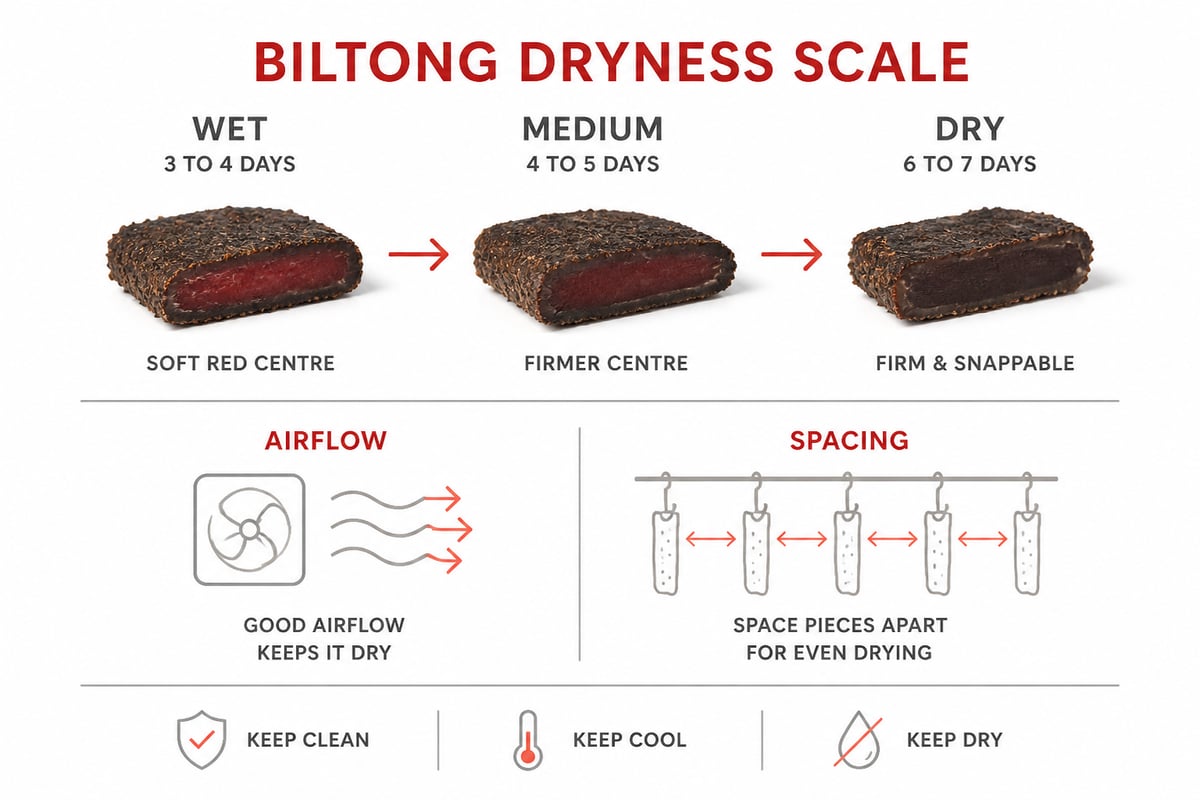
Biltong dries best at low heat with steady airflow, usually between 20°C and 30°C, and most batches take four to seven days depending on thickness and humidity.
Hanging the strips
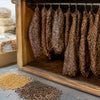
Pierce one end of each strip with a hook and hang it so nothing touches. Hanging slices so they do not touch allows air to circulate around each piece for even drying. Where pieces touch, moisture gets trapped and mould can start.
Airflow and heat
A small fan keeps air moving, which matters more than heat. A low-wattage bulb or dryer element adds gentle warmth, but too much heat dries the outside before the centre, leaving a hard crust and a wet middle.
For general principles on temperature control in dried meat, Kansas State University's drying meat overview is a useful reference.
How dry is dry enough?
Ready biltong is a matter of preference. The common textures are:
| Style | Drying time (approx.) | Texture |
|---|---|---|
| Wet | 3 to 4 days | Soft, deep red centre |
| Medium | 4 to 5 days | Firm outside, slightly soft inside |
| Dry | 6 to 7 days | Firm throughout, snaps when bent |
Squeeze a strip near the thickest part. If it feels firm with a little give, it is medium. Remember that safety is a separate question from texture. A water activity meter is the only reliable way to confirm this, so if you are drying wetter biltong or serving it to others, the extra check is worth it.
Food Safety Points for Home Biltong in New Zealand
Biltong is a raw-cured product, so food safety rests on clean handling, cold marinating, enough salt and acid, and thorough drying.
- Start with fresh, cold meat and keep it under 5°C until it goes into the dryer.
- Sanitise knives, boards and hooks before and after use.
- Do not reuse marinade that has touched raw meat for another purpose.
- Keep the drying area clean and dust-free, away from pets and cooking fumes.
- Discard any batch with fuzzy mould, a sour or putrid smell, or slime.
The USDA's shelf-stable food guidance explains why temperature control matters for dried meat generally. Pregnant women, the elderly and anyone with a weakened immune system should be cautious with any raw-cured meat.
A thin, harmless white bloom is sometimes salt or surface mineral. Fuzzy, coloured or raised growth is mould, and the strip should go in the bin.
Fixing Common Biltong Problems
Most biltong problems trace back to airflow, thickness or humidity, and each has a straightforward fix.
Mould on the surface. Usually caused by poor airflow, strips touching or too much humidity. Improve ventilation, space the strips further apart and avoid drying in a damp garage on a wet week.
Hard outside, soft inside. The drying was too warm or too fast. Lower the heat, rely more on the fan and cut thinner strips next time.
Tough, leathery biltong. The strips were cut against the grain, cut too thin or dried too long. Cut with the grain and pull a test strip earlier.
Weak flavour. Marinate longer, apply a more generous spice rub or season more heavily on the cut surface. Roasting the coriander also lifts the flavour noticeably.
Salty biltong. Reduce the salt slightly, but keep it at or above the MPI minimum, and consider a brief extra dab of vinegar rather than extra salt.
How Biltong Differs From Jerky
Biltong differs from jerky mainly in how it is cured and dried: biltong is vinegar-cured, spiced with coriander and air-dried in thick strips, while jerky is usually marinated in sauce and dried with heat.
| Feature | Biltong | Jerky |
|---|---|---|
| Origin | South Africa | North America |
| Cure | Vinegar, salt, coriander, pepper | Soy, Worcestershire, sugar, smoke |
| Drying | Air-dried, low heat, several days | Dehydrated or oven-dried, hours |
| Cut | Thick strips, often sliced after drying | Thin strips |
| Texture | Tender to firm, slices cleanly | Chewy, leathery |
The thicker cut and slow air-drying give biltong its distinct, almost steak-like bite, which is why it is often sliced thinly at the table rather than torn.
Storing and Serving Your Homemade Biltong
Store finished biltong in a paper bag or breathable container in a cool, dry place for a week or two, or refrigerate or freeze it for longer.
Plastic traps moisture, so avoid sealing warm biltong in an airtight bag. Once it has fully cooled, a paper bag in the pantry works well for short-term eating. For longer storage, vacuum-seal portions and freeze them, then thaw in the fridge.
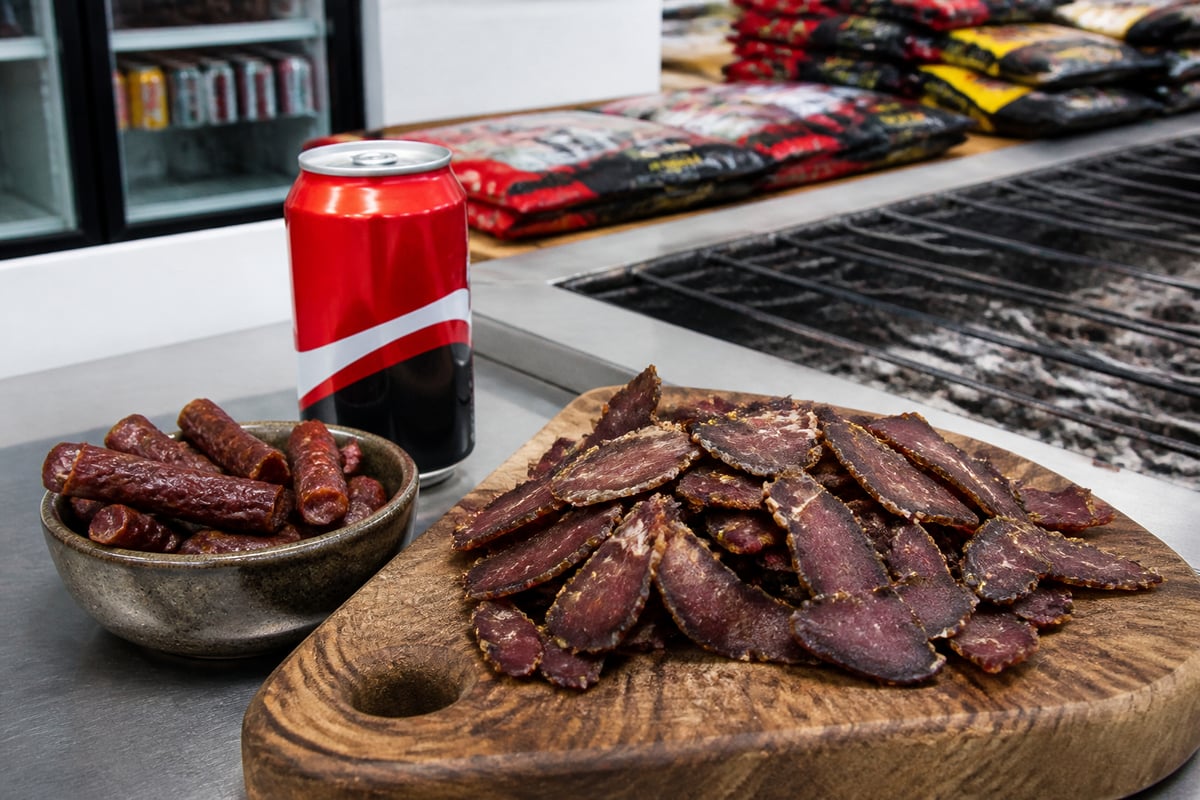
Slice across the grain for the most tender bite. Biltong goes well with a cold beer, a braai spread, or as a snack in the car on the way to the beach. It also works crumbled over salads or folded into scones and cheese spreads such as Melrose Cheese Spread Biltong.
FAQ
Why is biltong so expensive?
Biltong is expensive because a large amount of fresh beef is needed to produce a smaller weight of finished product, as much of the weight is lost during drying. Quality cuts, labour, slow drying and food safety controls add to the cost, which is why many South Africans in New Zealand make their own.
What is the best cut of beef for biltong?
Silverside is the most popular choice because it is lean, affordable and has a long, even grain that dries consistently. Topside and rump also work well if silverside is hard to find.
Can I make biltong without a drying box?
You can, using a well-ventilated cupboard with a small fan, but results are less predictable. A purpose-built dryer controls airflow and temperature more reliably and reduces the risk of mould.
Your next step is to pick a cut, confirm your fridge is below 5°C and gather your spice, hooks and a drying setup before the meat goes in. Something From Home is a South African food store in New Zealand with more than 2,500 South African products, so you can pick up authentic brands such as the Freddy Hirsch Hunters Biltong Seasoning 2kg alongside your braai and pantry favourites. If you would rather start with a ready-made set, you can shop available now for biltong ingredients, hooks and snacks in one order.